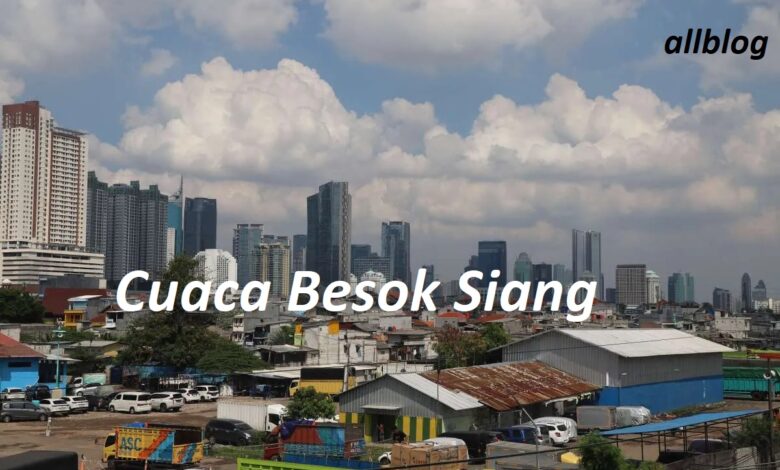
Weather has always fascinated humanity Cuaca Besok Siang. It dictates what we wear, how we plan our journeys, when we plant crops, and even how we feel on a given day. Among the many expressions people use when checking forecasts, one phrase that stands out is “cuaca besok siang.” Translated loosely, it refers to tomorrow’s midday weather, but it carries a cultural nuance and immediacy that makes it more than just a forecast. It reflects anticipation, curiosity, and preparation for what the skies will bring.
This article explores the concept of “cuaca besok siang” in detail: why midday weather matters, how forecasts are made, the cultural significance of paying attention to tomorrow’s skies, and how it influences everything from personal mood to national economies. By the end, you will see that looking ahead to the weather is not just about numbers or predictions—it is about how humanity positions itself in harmony with the natural world.
The Meaning of “Cuaca Besok Siang”
At first glance, “cuaca besok siang” simply asks: What will the weather be tomorrow at noon? Yet it resonates with a deeper human concern. Midday is often the busiest time of the day. It is when workers are in the middle of their shifts, students are in classrooms, travelers are on the move, and outdoor activities peak. Knowing what the weather will look like tomorrow at this specific moment is crucial.
Unlike evening or nighttime forecasts, the midday outlook tends to carry more practical weight. Will the sun scorch, or will clouds provide relief? Will rain pour, or will the skies remain clear? These answers determine decisions ranging from carrying an umbrella to scheduling outdoor events. “Cuaca besok siang” is therefore less of an abstract query and more of a planning tool.
Why Midday Weather Matters More Than You Think
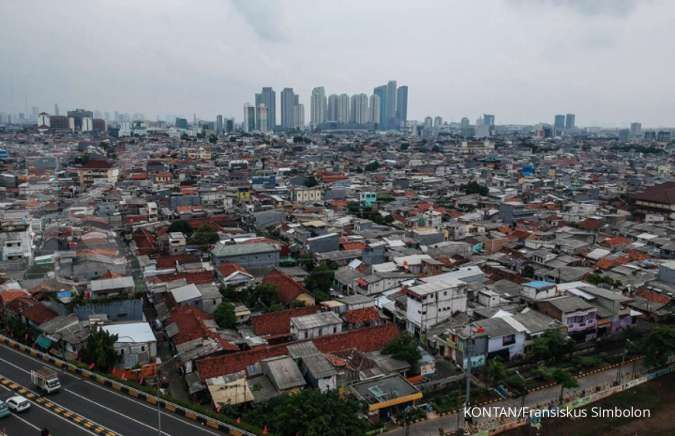
Midday marks the zenith of daily temperature fluctuations Cuaca Besok Siang. It is typically when the sun reaches its highest point, and its rays strike the earth most directly. For agriculture, tourism, education, and even mental health, this slice of time plays an outsized role.
- Agriculture: Farmers rely on midday forecasts to decide whether irrigation is needed, if crops should be shielded from excessive heat, or if planting and harvesting are possible without the risk of sudden downpours.
- Urban life: City dwellers use midday weather information to plan commutes, outdoor meetings, and errands. Nobody wants to be caught in traffic under heavy rain or a sweltering sun without preparation.
- Tourism: For travelers, sightseeing often peaks at midday. Knowing the cuaca besok siang allows them to adjust itineraries, avoid storms, or embrace sunny opportunities.
- Health: Exposure to extreme midday sun can lead to dehydration, heat exhaustion, or sunburn. Forecasts guide people to stay hydrated, wear sunscreen, or seek shade.
Thus, the phrase is more than casual curiosity—it embodies the need for synchronization between human activity and the forces of nature.
How Meteorologists Predict “Cuaca Besok Siang”
Weather forecasting is a blend of science, mathematics, and advanced technology. Predicting cuaca besok siang requires a combination of observation and computation.
- Satellite data provides images of cloud patterns, storm systems, and moisture levels.
- Radar systems track rainfall, wind direction, and the movement of storm cells.
- Weather balloons collect atmospheric readings such as temperature, humidity, and pressure.
- Computer models simulate different scenarios by feeding in massive amounts of data to predict what the skies will do at a specific time and place.
Meteorologists then interpret these results, refining them to suit local contexts. While forecasts are not perfect, modern science has dramatically improved accuracy, especially for short-term predictions like tomorrow’s midday weather.
Cultural Perceptions of Tomorrow’s Weather
The phrase “cuaca besok siang” reflects not just meteorology but also cultural practice. In many societies, talking about the weather is a daily ritual, a way to bond with others, or even a polite conversation starter. But in communities dependent on agriculture or fishing, it carries greater significance.
- In rural areas, villagers may gather in the morning to discuss cuaca besok siang and how it will affect their work.
- In coastal regions, fishermen rely on forecasts to decide whether it is safe to sail or better to wait.
- In urban centers, parents might remind their children to carry raincoats or hats after listening to a weather update.
The phrase thus becomes embedded in daily routines, blending science with tradition and precaution with community.
The Psychology of Anticipating Tomorrow
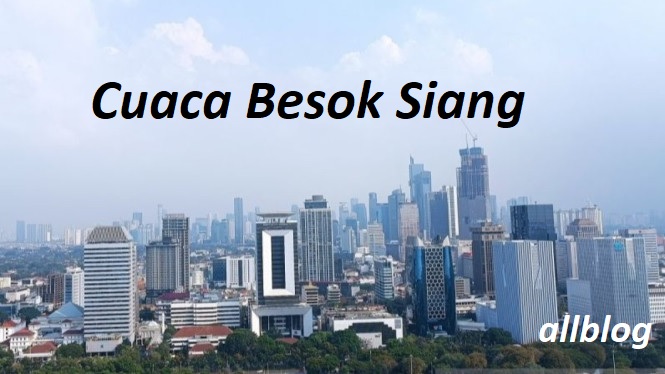
Waiting for tomorrow’s weather carries a subtle psychological effect. Anticipation influences emotions. A bright and sunny cuaca besok siang can inspire optimism, energy, and outdoor planning. Conversely, the forecast of storms or intense heat may bring caution or dampened enthusiasm.
Psychologists have long studied the connection between weather and mood. Sunlight exposure, for example, increases serotonin levels, which lift spirits. On the other hand, prolonged cloudiness or heavy rains can trigger fatigue or melancholy. By focusing on tomorrow’s midday skies, individuals mentally prepare themselves for how they will feel and act.
Economic Impact of Midday Forecasts
It may surprise some readers that cuaca besok siang plays a significant role in the economy. Entire industries hinge on short-term weather accuracy.
- Agribusiness: Crop yields depend on timely irrigation, fertilizer application, and harvests—all influenced by forecasts.
- Retail: Sales of umbrellas, sunscreen, and cold beverages fluctuate based on predicted conditions.
- Transportation: Airlines, shipping companies, and road logistics firms make decisions to reduce delays or hazards depending on weather projections.
- Energy: Electricity demand rises with high temperatures due to air conditioning or with low temperatures due to heating needs. Energy providers rely on forecasts to balance supply and demand.
Thus, something as simple as tomorrow’s midday weather influences markets, consumer behavior, and even global supply chains.
Technology’s Role in Making Forecasts Accessible
Not long ago, checking the weather meant listening to a radio broadcast or reading a newspaper. Today, smartphones, apps, and smart home devices provide instant updates. The phrase “cuaca besok siang” can now be typed into search bars, and within seconds, detailed forecasts appear with temperature charts, rainfall probabilities, and wind speeds.
Technology has not only improved accuracy but also accessibility. Farmers in remote areas, travelers in airports, and students at universities can all access the same forecast, leveling the field of preparedness. Artificial intelligence further refines predictions by learning from past patterns, promising even greater reliability in the near future.
Environmental Change and the Future of Forecasts
Climate change has introduced new challenges to weather prediction. Rising global temperatures, shifting wind currents, and unpredictable rainfall patterns make forecasting more complex. The phrase “cuaca besok siang” takes on new urgency in this context.
Communities worldwide now face extreme events more frequently: heatwaves, sudden storms, floods, and droughts. Reliable forecasts are essential for safety, resource management, and resilience. The focus on tomorrow’s midday conditions is no longer just about convenience; it is about survival and adaptation in a changing world.
Everyday Practices Shaped by “Cuaca Besok Siang”
The anticipation of midday weather influences countless small decisions that, when added together, shape lifestyles:
- Families plan picnics or indoor gatherings based on whether sunshine or rain is expected.
- Businesses schedule outdoor advertising campaigns or product launches with an eye on the forecast.
- Schools decide whether sports and field activities should go ahead.
- Event organizers make backup arrangements for concerts, festivals, and ceremonies.
In each case, the forecast of cuaca besok siang serves as a guiding light, steering choices toward comfort, efficiency, and safety.
The Poetic Dimension of Tomorrow’s Sky
Beyond science and practicality, there is poetry in the act of waiting for tomorrow’s weather. To wonder about cuaca besok siang is to acknowledge the mystery of the skies. Clouds drift, winds shift, and the heavens perform an ever-changing dance.
Writers, artists, and musicians have long drawn inspiration from weather patterns. A forecast becomes not just a scientific prediction but also a metaphor for human emotions: storms as struggles, sunlight as hope, drizzle as nostalgia. Thinking about tomorrow’s midday sky invites reflection on both the constancy and unpredictability of life.
Global Differences in Midday Weather Importance
Interestingly, the importance of cuaca besok siang varies across the globe:
- In tropical regions, sudden showers make it a critical piece of information.
- In desert areas, knowing whether midday will bring unbearable heat or manageable warmth is essential for safety.
- In temperate climates, the concern may revolve around whether the day will remain pleasant or turn stormy.
- In polar regions, even slight shifts in midday conditions can mean significant differences in visibility and mobility.
Thus, while the phrase originates in a particular language, the concept resonates universally. Every culture values tomorrow’s midday forecast, even if expressed differently.
Balancing Uncertainty and Preparation
Despite advances, weather forecasting remains an inexact science. Predictions are probabilities, not guarantees. When people ask about cuaca besok siang, they must balance trust in meteorological data with acceptance of nature’s unpredictability.
Preparation becomes the key. Carrying an umbrella, wearing layers, or adjusting schedules are small acts of resilience. Communities build infrastructure—drainage systems, shaded public spaces, emergency alerts—to handle the unpredictability of midday skies. In doing so, they transform uncertainty into readiness.
Conclusion: More Than Just Tomorrow’s Forecast
At its core, “cuaca besok siang” represents humanity’s relationship with time, nature, and anticipation. It is not merely about temperature or rainfall but about how people prepare for tomorrow, both practically and emotionally. From farmers tending fields to families planning outings, from businesses scheduling logistics to poets watching clouds, the midday forecast holds universal significance.
The next time you hear someone wonder about cuaca besok siang, remember that the phrase carries centuries of curiosity, adaptation, and hope. It is a small question with vast implications—bridging science, culture, and the eternal human desire to understand what lies ahead.