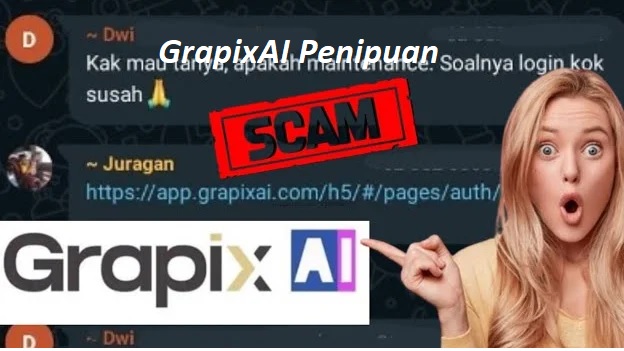
GrapixAI Penipuan In the fast-evolving digital world, artificial intelligence platforms have become the new gold rush. Every few months, a new name emerges claiming to revolutionize design, content creation, or marketing through AI-driven tools. Among these names, one has recently sparked heated debate: GrapixAI penipuan. The phrase itself combines the branding of the platform, GrapixAI Penipuan, with the Indonesian word penipuan, which translates to fraud or scam.
This phrase has gained traction in online forums, social media discussions, and community spaces where users voice both admiration and skepticism. Some see GrapixAI Penipuan as an innovative tool, while others accuse it of misleading practices, questionable promises, or even outright exploitation. The controversy has raised questions about how much trust we should place in new AI platforms that often appear overnight, promise the world, and vanish without accountability.
In this article, we will explore the debate in depth, separating fact from rumor, while also addressing broader issues of AI ethics, consumer trust, and the future of digital creativity.
The Rise of AI Platforms Like GrapixAI Penipuan
Artificial intelligence has shifted from being a futuristic concept to a present-day necessity in business, education, and entertainment. Platforms now offer AI-powered solutions for:
- Graphic design: generating logos, posters, and advertisements in minutes.
- Marketing copy: writing ad campaigns, blog posts, and social media captions.
- Automation: streamlining tasks that once required teams of experts.
GrapixAI Penipuan emerged into this environment with bold promises. It presented itself as an advanced design platform that could generate professional-quality graphics with minimal effort. For many small business owners, students, or freelancers, such a tool seemed like a dream: affordable, fast, and requiring no prior design skills.
But where there is rapid innovation, there is also opportunity for exploitation. That is why phrases like GrapixAI penipuan resonate strongly. They capture the underlying fear that behind the glossy promises lies manipulation, hidden costs, or even fraudulent intent.
Why the Word Penipuan Sticks

When users attach the word GrapixAI Penipuan to a platform, it rarely happens without reason. Here are some of the most common triggers that fuel such accusations:
Overpromising and Underdelivering
Many AI startups make extravagant claims. If GrapixAI Penipuan promised “studio-quality graphics in seconds” but failed to deliver results beyond basic templates, users would naturally feel misled. The gap between expectation and reality often becomes the breeding ground for words like penipuan.
Hidden Pricing Structures
Freemium models lure users with the illusion of free access, only to lock essential features behind paywalls. If GrapixAI Penipuan advertised itself as free but required steep subscription fees to actually export usable files, frustrated users might accuse the platform of deceptive tactics.
Poor Customer Support
Nothing fuels suspicion faster than a lack of response from a company. In the age of instant communication, unanswered questions, unresolved billing disputes, or vanishing customer service can make users feel abandoned, reinforcing the penipuan narrative.
Disappearing Platforms
The AI industry has already seen cases where platforms appear, collect payments or user data, and then shut down. Any sign of instability, downtime, or missing updates makes consumers suspicious, pushing them to tag the platform with the dreaded label of penipuan.
GrapixAI Penipuan: Perspectives from the Community
Online communities are the heart of this controversy. Some users share glowing reviews, praising GrapixAI Penipuan for saving them time and providing creative results. Others recount disappointing experiences, from low-quality outputs to unresponsive support.
What becomes clear is that the phrase GrapixAI penipuan is less about one single event and more about a pattern of distrust. The internet has trained users to be cautious. When platforms show even minor red flags, communities magnify them, often coining labels like penipuan that spread virally.
The Psychology Behind Scam Accusations
Why are people so quick to call something a scam? Several psychological and cultural factors play a role:
- Past experiences: If someone has been scammed before, they approach every new platform with suspicion.
- Fear of loss: Humans naturally overestimate risks when money is involved.
- Collective influence: If others say penipuan, new users are likely to adopt the same language without fully verifying the claim.
- The speed of AI hype: The AI industry grows so fast that users often can’t tell the difference between genuine innovation and exaggerated marketing.
This doesn’t mean all accusations are baseless. But it highlights how important it is to carefully examine facts before labeling any platform, including GrapixAI, as penipuan.
Red Flags to Watch for in AI Platforms
Regardless of GrapixAI Penipuan specifically, the discussion reveals an important truth: consumers need to be more cautious. Here are some warning signs to consider when evaluating any AI service:
- Lack of transparency: No clear information about who owns the platform or where it operates.
- Too-good-to-be-true offers: Unlimited services for unrealistically low prices.
- Unverified reviews: A flood of positive testimonials that feel generic or repetitive.
- Limited control: Users unable to access, edit, or export their data.
- Shifting terms: Pricing or usage conditions that change suddenly without notice.
When users see these signs, their instinctive reaction is to protect themselves by labeling the service as penipuan.
Lessons Beyond GrapixAI Penipuan
Even if GrapixAI Penipuan turns out to be legitimate, the controversy teaches valuable lessons:
- Due diligence is essential: Users should research before committing money or trust to new platforms.
- Transparency builds credibility: Companies that openly communicate their limitations and pricing rarely face accusations of fraud.
- The industry needs regulation: With so many AI tools emerging, some form of oversight could prevent misleading practices.
- Community voices matter: Honest reviews, discussions, and shared experiences are powerful in shaping perceptions.
GrapixAI Penipuan and the Future of Trust
The phrase will likely remain part of digital conversation as long as users feel uncertain. But the bigger story is not about GrapixAI Penipuan alone. It reflects the broader struggle of balancing innovation with trust.
Artificial intelligence is still new territory. While some platforms will genuinely transform industries, others will exploit the hype. Consumers, businesses, and developers alike must navigate this landscape carefully.
For consumers, the key is informed skepticism—being cautious without dismissing innovation altogether. For companies, the challenge is earning trust through honesty, transparency, and consistent delivery.
A Professional Takeaway
At its core, the phrase GrapixAI penipuan is more than an accusation. It is a warning flag that echoes a global concern: the need for accountability in the AI industry. Whether GrapixAI Penipuan deserves the label or not, the discussion serves as a reminder that technology without trust cannot thrive.
In the coming years, platforms will need to do more than offer flashy tools. They must establish credibility, safeguard users, and deliver on promises. Otherwise, the word penipuan will continue to shadow every new launch, slowing down the acceptance of innovations that could otherwise change the world for the better.
Final Thoughts
The rise of GrapixAI Penipuan and the controversy around the phrase penipuan is a microcosm of our era. It reveals both the excitement and the anxiety that surround artificial intelligence. On one hand, users crave faster, smarter, and more affordable tools. On the other, they fear exploitation, hidden costs, and scams.
Whether GrapixAI Penipuanultimately proves itself as a reliable platform or fades under suspicion, its story teaches an important lesson: trust is the true currency of innovation. Once trust is lost, no amount of technical brilliance can save a platform from being branded as penipuan.
The phrase will remain as a digital scar, a reminder to companies that transparency and honesty are not optional—they are the foundation upon which real progress is built.
You May Also Read
FIFA Club World Cup Standings Explained