
Throughout human history Kompas Arah, the question of direction has always shaped the way people move, live, and dream. Long before satellites, smartphones, and digital maps, there existed a simple yet powerful instrument: the compass. In Indonesia, the term kompas arah beautifully encapsulates this idea—literally meaning “compass of direction.” But while the phrase points to a navigational tool, its significance extends far beyond geography. It represents clarity, orientation, and even philosophy.
This article dives deeply into the world of kompas arah, exploring not only its mechanical aspects but also its cultural symbolism, historical role, and enduring relevance in both daily life and the digital era.
The Origins of Kompas Arah
The compass was first developed in China more than two thousand years ago, primarily for spiritual alignment and geomancy before it became an indispensable navigational tool. Over centuries, explorers, merchants, and adventurers relied on it to cross vast oceans, discover new lands, and connect cultures.
When translated into Indonesian context, kompas arah retains this aura of discovery. It does not simply describe a magnetic device; it suggests a deeper human quest for finding one’s way—whether on land, sea, or within personal journeys.
The term combines two essential concepts:
- Kompas: A tool rooted in precision and guidance.
- Arah: Meaning “direction,” encompassing both physical orientation and metaphorical paths in life.
Together, they form a phrase that is at once practical and poetic.
Kompas Arah as a Navigational Tool
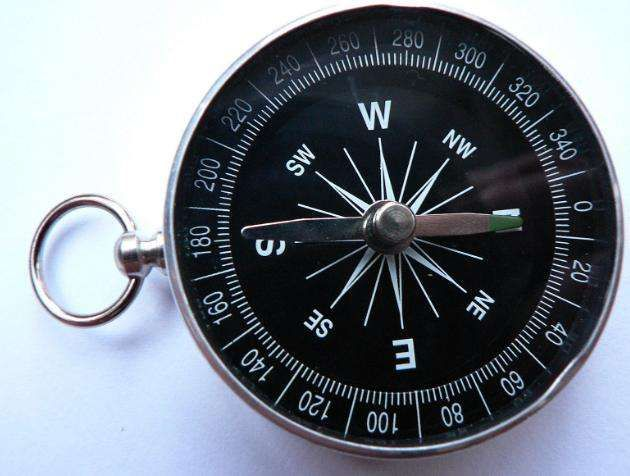
On the most practical level, kompas arah refers to the familiar magnetic compass. It consists of a needle that aligns itself with Earth’s magnetic field, pointing north. For centuries, this small instrument shaped the destiny of entire civilizations.
- Maritime Navigation: Indonesian seafarers, who have long been celebrated for their mastery of the oceans, relied on natural signs—stars, currents, and winds. When kompas arah entered their world, it enhanced their ability to navigate across the archipelago and beyond.
- Exploration and Trade: From the spice routes to Silk Road connections, compasses made it possible for trade to flourish and cultures to interact more consistently.
- Survival and Orientation: Hikers, soldiers, and travelers continue to use kompas arah today as a reliable backup when technology fails.
Its enduring simplicity is part of its genius. Unlike apps or GPS systems, it needs no signal, battery, or internet—just the natural magnetic field of the Earth.
Kompas Arah as a Cultural Symbol
Beyond its scientific utility, kompas arah embodies ideas that resonate in culture, literature, and philosophy. A compass has always been more than a device; it is a metaphor for purpose.
- Direction in Life: Just as sailors consult the compass to find their way through stormy seas, people often look to their own version of kompas arah when facing uncertainty. It symbolizes clarity amid confusion.
- Balance and Harmony: The compass needle always seeks equilibrium. This mirrors the human pursuit of balance between ambition and peace, material goals and spiritual fulfillment.
- Exploration of Identity: Kompas arah suggests that identity is a journey. We are always aligning ourselves with “true north,” whether that north is cultural heritage, personal values, or spiritual beliefs.
Indonesian literature, songs, and daily speech frequently use kompas arah as a metaphor, showing how deeply the concept is woven into thought and imagination.
The Philosophical Dimension of Kompas Arah
Every object carries stories, and kompas arah is no exception. When seen through a philosophical lens, it invites reflection on profound questions:
- What guides us when the world feels uncertain?
- How do we know if our chosen path aligns with our deeper purpose?
- Is direction something we discover outside ourselves, or something we build within?
Thinkers have long noted that while maps represent knowledge, the compass represents wisdom. A map can show every possible road, but points us toward the one road that matters most at a given time.
Kompas Arah in Modern Society

Today, in an age dominated by technology, some might think compasses are obsolete. Yet kompas arah continues to play vital roles, both literally and symbolically.
1. Education and Training
Scouts, outdoor enthusiasts, and military cadets still learn to use. The training instills not just practical survival skills but also discipline, patience, and confidence.
2. Digital Metaphors
Even in the digital world, we encounter compass icons on apps and devices. The metaphor of finding direction is so universal that kompas arah seamlessly blends with modern interfaces.
3. Corporate and Leadership Philosophy
Businesses often speak of having a “strategic compass.” Leaders emphasize the importance of vision and mission as a guiding kompas arah for organizations.
4. Personal Growth and Mindfulness
In self-development, the idea of aligning one’s life with a personal compass is central. Meditation, reflection, and journaling are ways of ensuring that personal points toward authenticity rather than distraction.
Lessons from Kompas Arah
The enduring power of this concept lies in the lessons it offers, both in everyday life and in extraordinary circumstances.
- Simplicity is Strength: Kompas arah functions through a simple principle, yet it can guide across oceans. Similarly, simple values—honesty, courage, kindness—can guide through complex challenges.
- Reliability Amid Change: The compass needle never loses its orientation, even when storms rage. Human resilience reflects this constancy.
- The Need for Calibration: Just as compasses can be affected by magnetic interference, human lives can be pulled off-course by noise and distraction. Periodic recalibration is necessary.
- The Journey Is Continuous: A compass does not tell us where we will end up; it only tells us the direction. The rest of the journey is an act of choice and persistence.
The Poetry of Kompas Arah
Writers, artists, and musicians often find inspiration in Its image evokes romance and adventure—the lone traveler finding direction under the stars, the seeker pursuing an inner truth.
Imagine holding a small compass in the palm of your hand. It does not speak, yet it offers a whisper of assurance. It reminds you that the world is vast but not chaotic, mysterious but not without order. This is the quiet poetry of kompas arah.
Kompas Arah in the Indonesian Imagination
In the Indonesian cultural landscape, the phrase kompas arah appears in education, media, and even spiritual discourse. It reflects a society deeply connected to both the seas and the search for meaning.
- Education: Teachers use the phrase to help students think about choices and direction in life.
- Daily Conversations: People might speak of needing a “kompas arah” when making a big decision.
- National Identity: In a country composed of thousands of islands, the metaphor of direction resonates strongly with collective identity.
The Future of Kompas Arah
What role will kompas arah play in a future dominated by artificial intelligence, autonomous navigation, and digital mapping?
Surprisingly, its role may become even more profound:
- As a backup tool in a world dependent on technology, reminding us of resilience.
- As a cultural metaphor that no machine can replace, reminding us that human beings need more than algorithms—we need meaning.
- As a timeless guide that continues to connect the tangible with the intangible.
In fact, as life becomes more complex, the simplicity of kompas arah may grow more valuable.
Final Reflections
Kompas arah is more than an object. It is a symbol, a philosophy, and a mirror of human existence. It teaches us that while technology may change the way we move, the need for direction never disappears.
From ancient sailors to modern leaders, from spiritual seekers to everyday individuals, the idea of a guiding compass remains central. It assures us that no matter how vast the world becomes, there is always a way to orient ourselves—geographically, emotionally, and spiritually.
In this way, kompas arah will continue to inspire explorers, thinkers, and dreamers for generations to come. It is both a tool of navigation and a metaphor of life, reminding us that direction matters more than speed, and clarity matters more than complexity.
